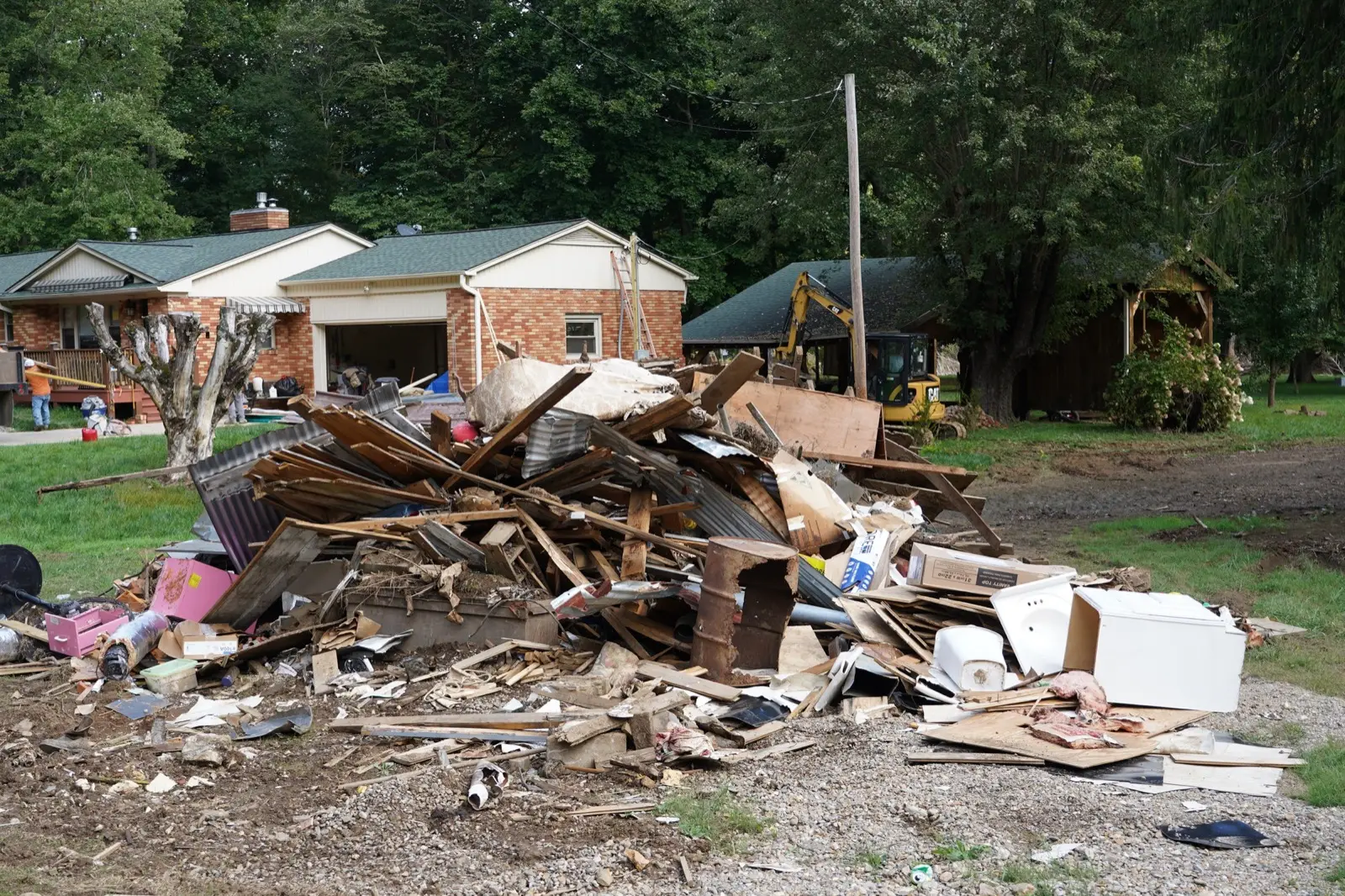
What Is the FEMA 50 Percent Rule in Florida?
The FEMA 50 rule decides whether a flood-damaged home can simply be repaired. A building is substantially damaged when repairs would cost 50 percent or more of its market value before the damage. Past that line, the repairs have to bring the whole building up to current flood rules.
The federal 50 percent is a minimum, and Florida counties and cities write their own rules on top of it. Unincorporated Hillsborough County uses 50 percent for buildings in its mapped flood zones. Unincorporated Pinellas County and the City of St. Petersburg use 49 percent. This guide is general information, so confirm every rule with your local floodplain administrator or building department.
A house over the line has four ways forward. It can be elevated, rebuilt to current flood code, moved or torn down. A teardown means house demolition, then a new home built to today’s flood rules. Flood insurance may help, since Increased Cost of Compliance coverage lists demolition as one of its four options.
What Is Substantial Damage Under the FEMA 50 Rule?
The rule comes from the National Flood Insurance Program regulations, at 44 CFR 59.1. There, substantial damage means restoring a building would equal or exceed 50 percent of its pre-damage market value. The damage can come from any cause, including fire or wind. If the repair estimate is half the building’s market value or more, the building is over the federal line.
The same line covers remodels and additions. Any improvement costing 50 percent or more of the building’s market value before work starts is a substantial improvement. Once a building is substantially damaged, every repair counts as substantial improvement, whatever the work.
Who Decides If a Home Is Substantially Damaged?
The community where the house sits makes the call, through its local floodplain administrator. After a storm, that substantial damage determination can arrive as a letter. The City of Tampa, for one, announced it would begin mailing substantial damage assessment letters to property owners. Find out which office covers your address before you price repairs.
How Does the FEMA 50 Rule Work in Hillsborough County?
Unincorporated Hillsborough County applies the rule at 50 percent. It covers buildings in flood zones A, AE, V, VE, AO, AH, AR and A99, the Special Flood Hazard Area. A building over the line must be brought into compliance with the Florida Building Code and county flood rules.
A repair permit there comes with paperwork. The county asks for a Substantial Improvement/Substantial Damage Worksheet and a cost breakdown. The contractor and the owner also sign an attestation. The cost count includes donated materials and the owner’s own labor, plus contractor overhead and profit.
The county’s guidelines add up repair and improvement costs over a 12-month period. A 2025 Florida law, SB 180, may change that. It bars local governments in the flood insurance program from adopting cumulative substantial improvement periods, also called lookback ordinances.
Ask the county’s floodplain staff how the county counts repairs on your address today. Inside Temple Terrace, the city’s own flood page states the same 50 percent rule. All development in the city’s floodplain needs a permit.
Why Is It 49 Percent in Pinellas County and St. Petersburg?
Under 44 CFR 60.1, local floodplain rules that are stricter than the federal ones are encouraged and take precedence. Some Pinellas communities use that room to set the line at 49 percent.
In unincorporated Pinellas County, the line is repairs costing 49 percent or more of the home’s value without the land. The county manages those assessments for unincorporated areas only. Residents of a city check with their own city.
The City of St. Petersburg also puts the line at 49 percent of the pre-damage market value. In those places, the FEMA 50 rule works as a 49 percent rule. Clearwater sets its own rules inside city limits, so check the percentage with the city before you price repairs.
How Is Market Value Set for the 50 Percent Rule?
Market value means the building, not the land under it. Pinellas County says it plainly: the value of the building and structures, excluding the land.
In Hillsborough, the building value comes from the Property Appraiser website, adjusted by a factor from the appraiser’s office. Owners can bring their own number instead. The county accepts a current actual cash value appraisal from a qualified independent appraiser. Ask your community what it accepts before you pay for one.
Are There Exceptions to the FEMA 50 Percent Rule?
The federal definition of substantial improvement leaves out two kinds of work. One is the minimum fix for health, sanitary or safety code violations that a local code official has identified. The other is an alteration that keeps a historic structure’s designation. A home listed individually in the National Register of Historic Places is one example.
Some costs also stay out of the math. Hillsborough leaves out permit fees, plans, land surveys, and cleanup such as mud removal and drying the building out. Driveways, fences, swimming pools and detached garages or sheds stay out too. Confirm the list with your building department, since each community writes its own rules.
What Are Your Options When a Home Is Substantially Damaged?
Repairs and rebuilds both have to meet current flood rules. In AE and AH zones, federal rules set a floor height for new and substantially improved homes. The lowest floor has to sit at or above the base flood level. Your community may require more.
Elevating raises the house to or above the flood elevation your community adopted. Rebuilding to current code brings the whole structure into compliance with the building code and local flood rules. Relocation moves the house out of harm’s way. Demolition clears the lot so a new home can go up to today’s rules.
On a teardown, we take the house down, pull the slab, haul the debris and grade the lot. The debris leaves in our dump trucks, the same construction debris removal we run for other job sites. A teardown needs its own permit, covered in the demolition permit steps in Hillsborough County. For budgeting, see what a house demolition costs in Florida.
If the damage stays under the line, repairs can start by taking out the wet materials. Selective demolition removes flooded drywall, flooring, cabinets and tile so the frame can dry.
What Does Increased Cost of Compliance Pay For?
Flood insurance policyholders in high-risk flood areas may receive up to $30,000 through Increased Cost of Compliance, or ICC. The money helps bring a home into compliance with local floodplain rules. ICC has four options: elevation, relocation, floodproofing and demolition. FEMA says floodproofing is mainly for non-residential buildings.
You can only file an ICC claim after your community finds the home substantially or repetitively damaged by a flood. Repetitive damage counts only where the local ordinance has that provision. It means two floods in 10 years, with repairs averaging 25 percent or more of market value.
The ICC claim is adjusted separately from your flood damage claim. Once the community decides, contact the insurance company or agent who wrote your flood policy.
Where Does Demolition Fit After a Substantial Damage Letter?
The community makes the substantial damage call, and your insurance company handles the ICC claim. Our part starts once you choose a teardown. Based in Valrico, Global Construction and Home Repair works about a 50-mile radius across Tampa Bay.
See how our house demolition work runs. Call or text (813) 239-4231 for a free estimate on your structure.