How Much Does a Building Pad Cost in Florida?
One national cost guide says it costs $1,000 to $6,700 to prepare a site for a new home. Another national guide lists a foundation pad for a new home site at $1,500 to $10,000. The two guides disagree on the top end, so read them as a wide band.
Fill dirt is sold by the cubic yard. A Tampa price guide puts structural fill at $20 to $30 per cubic yard. Clean fill runs $15 to $20. These are market numbers, not our price list. We price building pad prep after we see the lot, and the estimate is free.
What goes into building a house pad?
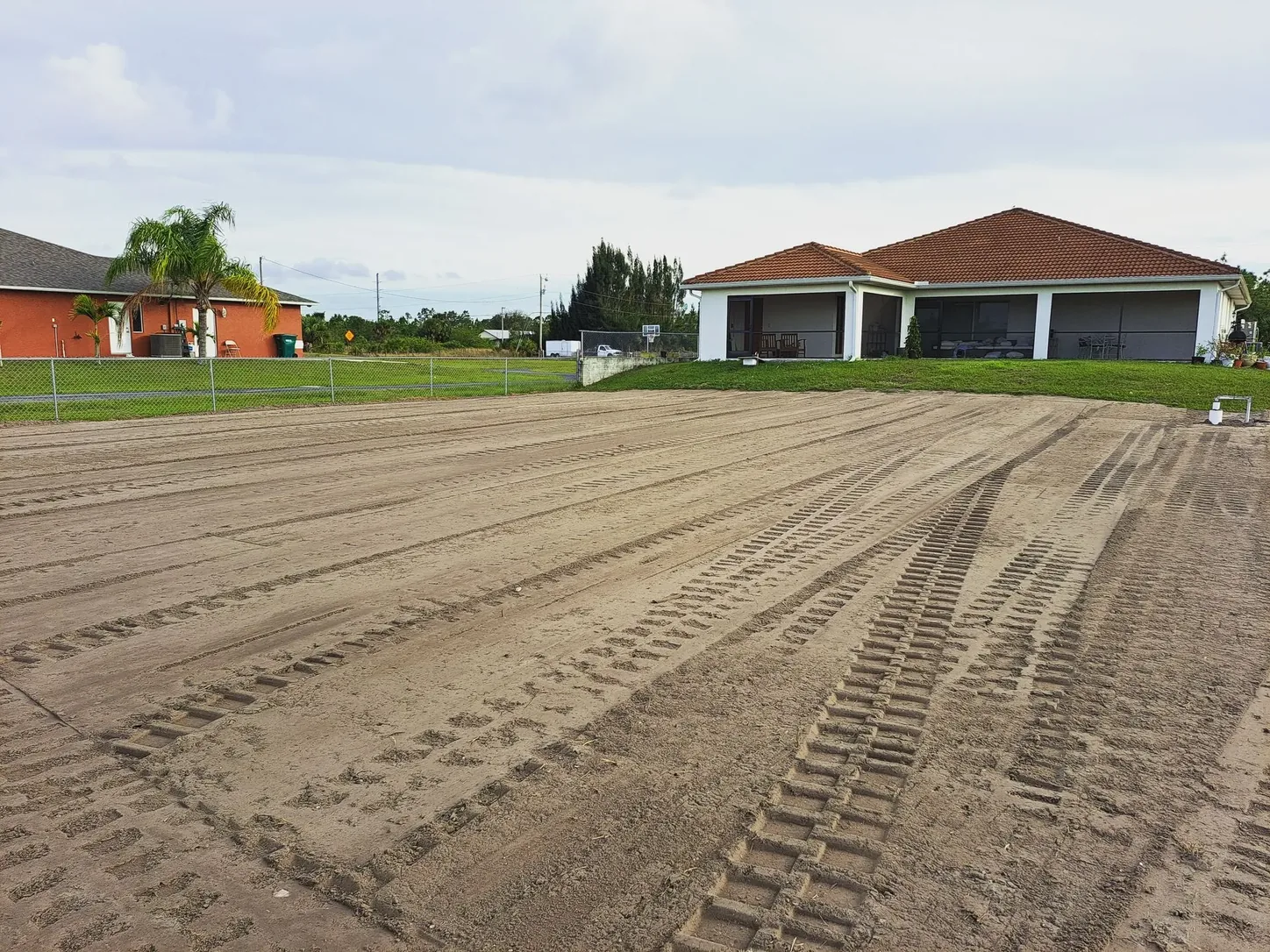
A building pad is the raised, compacted dirt base that a new house, addition or slab sits on. It goes in after a lot is cleared or an old building comes down. Our part ends with a finished pad, and a foundation contractor pours the slab on it.
The work runs in this order:
- Clear the lot. If trees and brush still stand, land clearing comes first. Our land clearing cost guide lists those published prices.
- Take out what fill cannot sit on. After a house demolition, the old slab and footings come out and the holes get filled. Roots, stumps and buried debris come out too.
- Haul in fill and spread it in layers, compacting each layer as it goes down.
- Have the compaction tested before the foundation work starts.
- Shape the top so the pad sits at the right height and sheds water.
Florida’s residential code sets two rules for fill under a slab. The fill has to be free of vegetation and foreign material. It also has to be compacted so the slab gets uniform support.
How much does a building pad cost?
Here are the published figures side by side. None of them is our price.
| What it covers | Published range |
|---|---|
| Preparing a site for a new home, national | $1,000 to $6,700 |
| Foundation pad for a new home site, national | $1,500 to $10,000 |
| Structural fill, Tampa | $20 to $30 per cubic yard |
| Clean fill, Tampa | $15 to $20 per cubic yard |
| Hauling extra dirt away, national | $8 to $25 per cubic yard |
| Soil compaction test, national | $10 to $100 per sample |
| Fill permit with no construction, unincorporated Hillsborough County | $272.47 |
The two whole-pad ranges overlap from $1,500 to $6,700. Above that, they part ways, so ask what each quote includes.
The fill math is simple. Multiply the pad’s length by its width by its height in feet. Divide by 27, the cubic feet in a cubic yard. One national guide says a cubic yard covers about 55 square feet at 6 inches deep.
| Pad | Fill before compaction | Structural fill at $20 to $30 per cubic yard |
|---|---|---|
| 2,000 sq ft raised 1 foot | about 74 cubic yards | about $1,480 to $2,220 |
| 3,000 sq ft raised 1 foot | about 111 cubic yards | about $2,220 to $3,330 |
| 2,000 sq ft raised 2 feet | about 148 cubic yards | about $2,960 to $4,440 |
That is the fill alone. Delivery, spreading, compaction and testing come on top. Fill also packs down as it is compacted, so the order runs higher than the raw volume.
What moves the price of a house pad?
Height comes first. Raising the same 2,000 square foot pad 2 feet instead of 1 doubles the fill. In a flood zone, the code sets that height, as the next section shows.
The fill type matters next. Florida’s residential code limits how deep fill under a slab can go unless it is approved. The cap is 24 inches for clean sand or gravel and 8 inches for earth. A deeper pad needs that approval, and the plans say which fill to use.
What is already on the lot matters too. One national guide says to expect the high end when old structures have to come down first. Old slabs, footings and buried concrete take machine time to dig out and haul.
Extra dirt costs money to move. A national marketplace’s cost guide says hauling dirt away adds $8 to $25 per cubic yard. Testing adds its own line, at $10 to $100 per sample in one national guide.
Grading a yard that holds water is a different job. Our land grading cost guide covers those prices.
How high does a building pad need to be in Florida?
The pad sets the height of the floor built on it. Florida’s residential code covers flood hazard areas. There, the lowest floor must sit at or above the base flood elevation plus 1 foot. If the local design flood elevation is higher, the code uses that number.
Shallow flooding zones are marked AO on the flood map. There, the floor sits above the highest nearby ground by the depth number plus 1 foot. With no depth number on the map, it sits at least 3 feet up.
Fill in a flood hazard area has rules too. The building code approves fill there only when it is placed, compacted and sloped against shifting, slumping and erosion. That has to hold as flood water rises and falls.
Every lot has to drain, flood zone or not. The residential code says the grade must fall at least 6 inches within the first 10 feet from the foundation. Where lot lines or walls block that, drains or swales do the job.
This is a general summary, not legal advice. Your plans and the permit office set the height for your lot.
Do you need a permit to fill a lot for a building pad?
In unincorporated Hillsborough County, filling land counts as land alteration. With no construction, it takes a natural resources permit. The county’s fee schedule lists $272.47 for that permit.
When a house is going up, lot grading goes under a Land Alteration and Landscaping permit. The building permit covers the house itself. Work that affects wetlands or surface water flows can also need a Southwest Florida Water Management District permit.
Inside a city, that city’s permit office may cover your address. Confirm with the office for your lot before work starts. Florida law requires notice to Sunshine 811 at least 2 full business days before digging. We make that call before the excavator starts.
How do you get a real number for your pad?
A published range helps you plan. The real number comes from your lot. That means the pad size, the height, the fill and the way in for trucks.
Global Construction and Home Repair is based in Valrico. We work about 50 miles out, across Hillsborough, Polk and Pasco counties. We look at the lot first, then price the dirt work. Our part ends at a finished, compacted pad, ready for the foundation contractor. See how our building pad prep runs, then call or text (813) 239-4231 for a free estimate.